
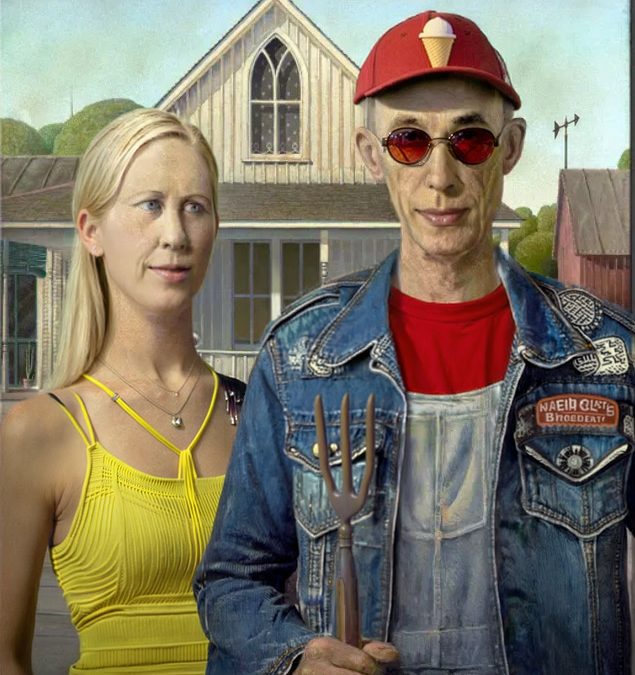
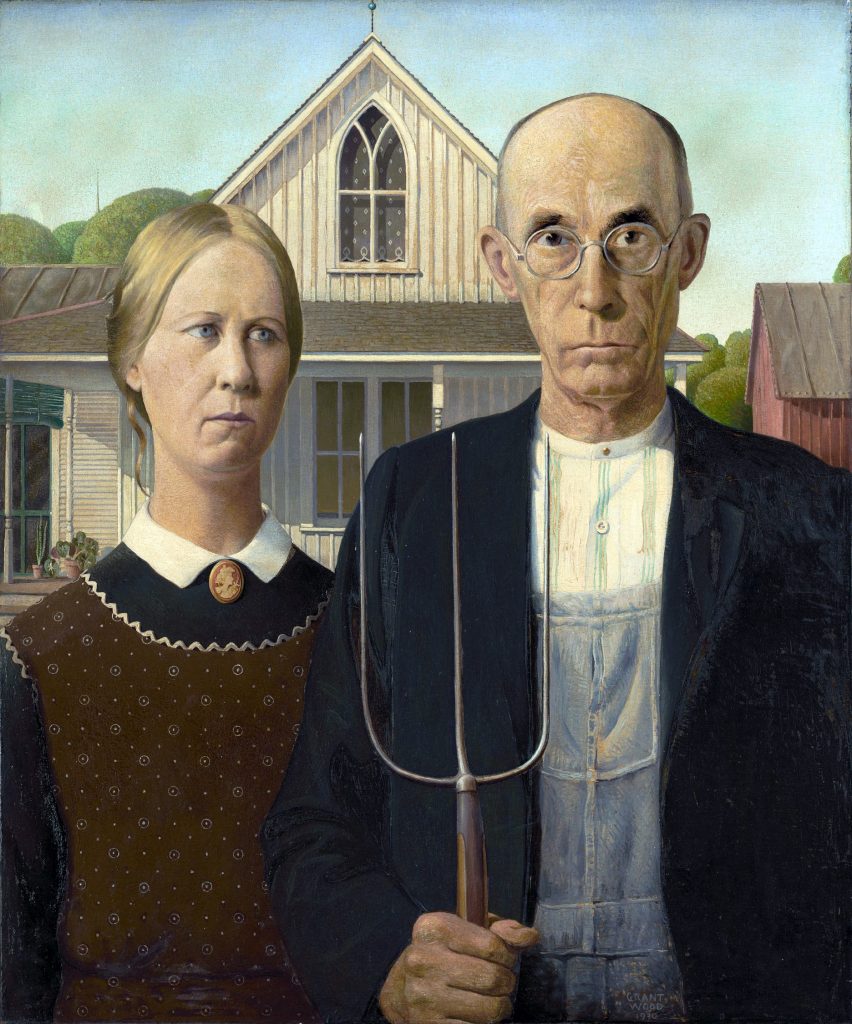
American Gothic 1930
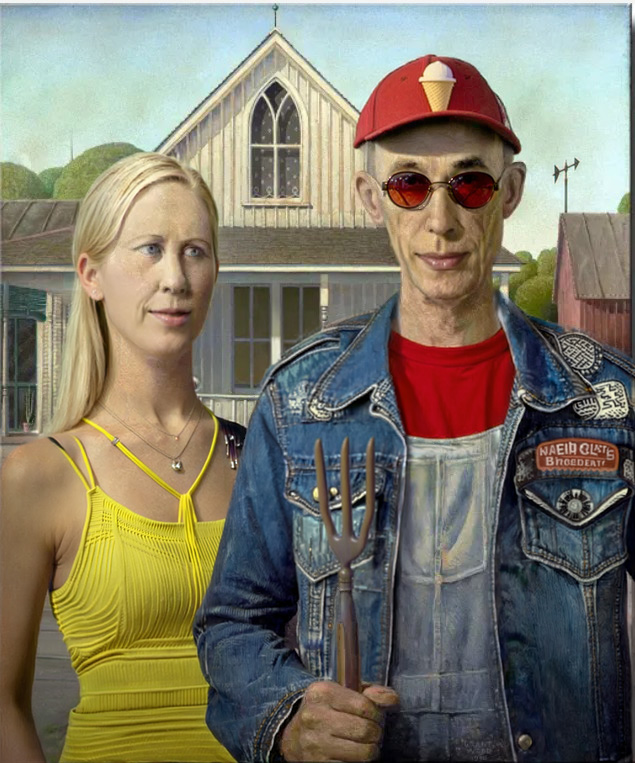
American Gothic 2026
American Gothic
Grant Wood, American Gothic, 1930. Friends of American Art Collection, Art Institute of Chicago. (Public Domain)
Grant Wood’s ‘American Gothic’ (1930) is arguably the best-known – and most frequently parodied – work in American art history. It immediately evokes associations with the spirit of the Midwest and remains a fascinating study of character, architecture and the complexity of American identity.
Whilst many assume the painting depicts a married couple, Wood actually intended the figures to represent a father and his daughter. The models were Wood’s sister Nan and his dentist, Dr Byron McKeeby.
The background is a real house in Eldon, Iowa, built in the Carpenter Gothic style. Wood was impressed by the house’s ‘particularly picturesque’ appearance, especially the oversized, pointed window on a modest wooden structure. He imagined what sort of people would live in such a house: stern, resilient and deeply rooted in their surroundings.
Key artistic details
The facial expressions: The characters’ fixed, unmoving gazes have been interpreted in various ways – from a tribute to American resilience to a biting satire on small-town narrow-mindedness.
The pitchfork: The three-pronged tool finds its counterpart in the seams of the man’s dungarees and the vertical lines of the house cladding, creating a sense of structural unity.
The apron: The colonial-patterned apron worn by the woman suggests a longing for traditional domesticity and a ‘pioneering’ heritage.

